

Introducing Temple of Heaven
The Temple of Heaven is a complex of imperial religious buildings. It was first constructed in 1420, during the reign of the Ming Emperor Yongle, alongside the construction of the Forbidden City. This complex was visited by the Emperors of the Ming and Qing dynasties for annual ceremonies of prayer to Heaven for a good harvest. Covering an area of 273 hectares, the Temple of Heaven is the best preserved and largest sacrificial building complex in the world. The design of its main buildings is a combination of circles and squares, symbolizing the belief that Heaven is round and Earth is square. The Temple of Heaven is also recognized as a masterpiece of ancient Chinese culture and is considered the supreme achievement of traditional Chinese architecture. It was inscribed on UNESCO’s World Heritage List for its unique architectural design and its cultural significance.
Temple of Heaven Fast Facts
• Chinese Name: Tian Tan 天坛
• Best Time to Visit: Apr, May, Jun, Sept, and Oct
• Recommended Visiting Hours: About 2 hours
• Opening Hours: 8:00 – 18:00 (Apr – Oct), 8:00 – 17:00 (Nov – Mar)
• Entrance Fee: CNY34 (Apr – Oct), CNY28 (Nov – Mar)
• Address: Tiantan East Road, Dongcheng District, Beijing
Reasons to Visit the Temple of Heaven
UNESCO World Heritage Site
The Temple of Heaven has been listed as a UNESCO World Heritage Site since 19981. It is recognized as a masterpiece of architecture and landscape design that simply and graphically illustrates a cosmogony of great importance for the evolution of one of the world’s great civilizations.
Largest imperial religious building complex
The Temple of Heaven is the largest of the imperial religious building complexes in Beijing. It is made up of a total of 92 ancient buildings that have a combined 600 rooms.
Symbolic architecture
The design of the main buildings is a combination of circles and squares, which symbolize the belief that Heaven is round and Earth square. The Temple of Heaven is known for its rigorous symbolic layout, peculiar structure, and magnificent decoration.
Historical significance
The Temple of Heaven was built around 600 years ago, between 1406 to 1420, during the Ming Dynasty. During the Ming and Qing dynasties of China, the emperors would go there to pray for good harvests. It was an important part of the religious order of the later history of China.
A beautiful and serene place to visit
The Temple of Heaven is located in a large park and is surrounded by trees and flowers. It is a great place to relax and escape the hustle and bustle of the city.
What to Expect at the Temple of Heaven
Constructed initially in 1420, during the 18th year of Emperor Yongle’s rule in the Ming Dynasty, the Temple of Heaven underwent expansions and renovations during the reigns of Ming Emperor Jiajing and Qing Emperor Qianlong. This architectural masterpiece is not only grand and magnificent but also exudes a sense of formality and solemnity.
The outer wall of the Temple of Heaven is designed with a semi-circular shape in the north and a square shape in the south, symbolizing the ancient belief that Heaven is round and Earth is square. The Temple of Heaven, divided into inner and outer sections by a double wall, spans a total area of 273 hectares.
The inner temple is further divided into two sections by another wall. The northern section houses the Altar of Praying for Bumper Crops, with the Hall of Prayer for Good Harvests as its main building, where prayers for a fruitful harvest are offered in spring. The southern section features the Circular Mound Altar, used for worshipping Heaven during the winter solstice, with its main structure being a large round marble terrace known as the Circular Mound.
These two altars are linked by a 360-meter-long elevated walkway known as the Red Step Bridge. They form a north-south axis that stretches 1,200 meters and is surrounded by ancient cypress trees in a spacious area.
The Abstinence Hall, where feudal emperors practiced abstinence before rituals, is located to the south of the inner West Celestial Gate. The Divine Music Office, responsible for teaching and performing ritual music, is situated in the western part of the outer temple.
The Temple of Heaven comprises several main buildings including the Hall of Prayer for Good Harvests, the Hall of Heavenly Emperor, the Circular Mound, the Imperial Vault of Heaven, the Abstinence Hall, and the Beamless Hall. Other structures include the Long Corridor, the Longevity Pavilion arranged in a double ring shape, as well as unique features like the Echo Wall, the Three Echo Stones, and the Seven Meteoric Stones.
How to Get to Temple of Heaven
• By Subway:Take Subway Line 5 to Tiantan Dongmen Station (Exit A). Head east and you will find the East Gate of the Temple of Heaven.
• By Bus: Take a bus to Tiantan Nanmen Station. The buses that go there are 36, 958; Take a bus to Tiantan Ximen Station. The buses that go there are 2, 7, 20, 36, 53, 72, 120.
Additional Travel Advice on Temple of Heaven
• Through Ticket is for 3 attractions: the Hall of Prayers for Good Harvests, the Echo Wall and the Circular Mound Altar.
• Ticketing and last entry close 30 minutes before closing time.
Grid List
Tour Highlights
• Feel the heartbeat of China at Tiananmen Square, the largest city square in the world.
• Explore the Forbidden City, home to 24 Chinese emperors and their households for almost 500 years.
• Enjoy a commanding view of the Forbidden City and Beijing from the top of Jingshan Park.
• Discover Temple of Heaven where Emperors of Ming & Qing dynasties pray to Heaven for good harvest.
• Hike along Jinshanling Great Wall, the best preserved part of Ming Dynasty wall with many original features.
• Step into Puning Temple to admire the world's tallest wooden sculpture of the Bodhisattva Avalokiteśvara.
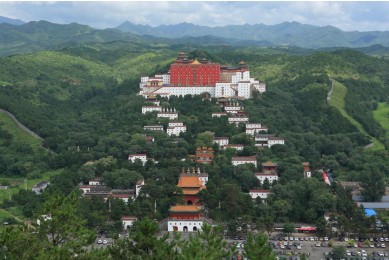
• Discover Putuo Zonghseng Temple, modeled after the Potala Palace of Tibet & nicknamed the Little Potala Palace.
• Wander through the Mountain Resort, the largest existing imperial palace-garden and temple complex in China.
• Admire Summer Palace, the best preserved imperial garden in the world, and the largest of its kind in China.
• Marvel at Bird Nest & Water Cube, two architectural icons from the 2008 Beijing Olympic.
Tour Itinerary at a Glance
• Day 1 Arrival in Beijing, Beijing Airports or Train Stations Pick-up
• Day 2 Beijing, Tiananmen Square, Forbidden City, Jingshan Park, Temple of Heaven
• Day 3 Beijing, Jinshanling Great Wall, Drive to Chengde, Puning Temple
• Day 4 Chengde, Putuo Zonghseng Temple, Imperial Summer Palace of Mountain Resort
• Day 5 Drive to Beijing, Summer Palace, Photo Stop at Bird Nest & Water Cube
• Day 6 Departure from Beijing, Transfer to Beijing Airports or Train Stations
Hotels & Meals
• 3 nights of accommodations at 4-star Pentahotel Beijing or similar
• 2 nights of accommodations at 4-star Junan Gloria Plaza Hotel Chengde or similar
• Daily hotel breakfast included, lunch & dinner on your own
Tailor This Tour to Meet Your Needs
• If you've booked your own hotel, prefer a different stay, or wish to modify this itinerary, contact us via WhatsApp (+86 139 1083 0737) or email (info@GrandChinaTravel.com), and we'll craft a personalized tour just for you.
Tour Prices (US$ Per Person)
| 1 person | 2 people | 3 people | 4 people | 5 people | 6 people | 7 people | 8 people | 9 people | 10 + |
| $1398 | $738 | $658 | $588 | $558 | $528 | $508 | $488 | $478 | $458 |
Price Remarks
• Prices are not valid during National Day (Oct 1-7), Chinese New Year, and Labor Day (May 1-5).
• Prices are based on double/twin/triple occupancy at the suggested hotels.
• A single supplement is charged for single room occupancy.
Price Inclusions
• Hotel accommodation with daily buffet breakfasts
• Professional English language speaking guide
• Air-conditioned vehicle with an experienced driver
• Admission tickets to sightseeing places
• All government taxes
Price Exclusions
• Your personal expenses.
• Tour guide for departure transfer.
• Lunches & dinners are excluded allowing you flexibility on menu.
• Travel insurance is not included. Please purchase before your trip to provide for any unforeseen circumstances.
• Gratuities to guide & driver. They are customary and would be of great encouragement and reward for quality service.
Additional Info
• Confirmation will be received at time of booking.
• Operates in all weather conditions, please dress appropriately.
• The itinerary is subject to change due to traffic conditions or bad weather.
• The itinerary is flexible; changes can be made upon written request from travelers.
• Advice on Meals: Please feel free to ask your guide for recommendations on authentic local food.
• IMPORTANT: It is required by the government regulations that travelers must provide their name, gender, nationality, passport number and date of birth to their tour operator upon booking a tour. Failure to do so could result in being denied access or admittance to sites and attractions during sightseeing. When you book this tour, please complete all required fields at checkout. Please bring your passport with you on the tour.
Cancellation Policy
• Cancellations made 31 days or more before departure will receive a 100% refund.
• Cancellations made 22-30 days before departure will incur a 10% fee.
• Cancellations made 15-21 days before departure will incur a 30% fee.
• Cancellations made 8-14 days before departure will incur a 50% fee.
• Cancellations made 0-7 days before departure are non-refundable.
• Once the tour commences, there are no refunds for unused services or missed days.
• Cancellation request will be confirmed within 2-5 business days, with refunds issued within 14 working days.
Grid List